
What is EUDAMED?
EUDAMED is the European database designed to collect and manage information on medical devices placed on the European market. It was established under Regulation (EU) 2017/745 (MDR) and Regulation (EU) 2017/746 (IVDR) to improve the traceability of medical devices and provide a comprehensive overview of their lifecycle.
Its primary objective is to increase transparency for healthcare professionals while strengthening coordination between EU Member States by improving access to regulatory information for manufacturers, notified bodies, competent authorities, and other stakeholders.
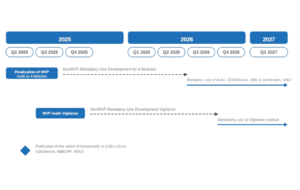
Adaptation Process and Timeline for the Mandatory Modules
(Insert timeline or graphic here.)
EUDAMED Structure
EUDAMED consists of six interconnected modules. As of 28 May 2026, the first four modules are mandatory.
Module 1: Actor Registration
This module includes manufacturers, authorised representatives, and importers. It serves as the entry point to EUDAMED, where every economic operator must register.
Registration requires obtaining a Single Registration Number (SRN), a unique identifier that enables competent authorities to recognise each economic operator within the system. This strengthens regulatory oversight, requires operators to keep their information up to date, and ensures full compliance with the MDR and IVDR.
To be considered successfully registered, an economic operator must:
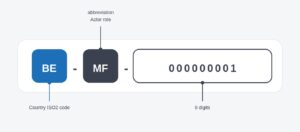
- Have a validated actor registration application.
- Be assigned an Actor ID/SRN.
The main economic operators are:
Manufacturers
Manufacturers must register in EUDAMED, manage their relationship with authorised representatives, register their devices, and submit post market surveillance and vigilance reports.
Importers
Importers must register, link themselves to non EU manufacturers whose devices they place on the European market, and access information related to those manufacturers and their registered devices.
Authorised Representatives
Authorised Representatives must register, participate in the registration of non EU manufacturers, manage mandates, submit vigilance reports when applicable, and verify the information provided by the manufacturers they represent.
Module 2: Device Registration (UDI)
This module contains detailed information about medical devices, including the Unique Device Identifier (UDI).
It is considered one of the most critical modules because it focuses on device identification and traceability. The UDI provides key information, including manufacturer details and essential device data.
The UDI consists of two components:
- UDI DI (Device Identifier)
- UDI PI (Production Identifier)
This module is essential for integrating EUDAMED with a company’s internal ERP systems, enabling effective traceability throughout the product lifecycle.
Module 3: Certificates and Notified Bodies
This module stores certificates issued for medical devices together with information about the notified bodies responsible for conformity assessment.
It includes:
- CE certificates
- Certificate scope
- Certificate validity status
The module improves transparency regarding certificate validity, facilitates access for competent authorities, and enables verification of certified devices available on the European market. Ultimately, it helps reduce the risk of counterfeit, invalid, or outdated certificates.
Information about notified bodies is available through the NANDO database.
Module 4: Vigilance and Post Market Surveillance
This module enables the reporting of serious incidents and Field Safety Corrective Actions (FSCAs).
It focuses on devices already placed on the market and supports effective post market surveillance.
The module is primarily intended for competent authorities, as they are responsible for most market surveillance activities under the MDR and IVDR.
Module 5: Clinical Investigations and Performance Studies
This module records clinical investigations and performance studies related to medical devices and in vitro diagnostic devices.
It includes:
- Applications for authorisation
- Study protocols
- Final study results
The objective is to harmonise clinical investigations across Europe, improve transparency, and facilitate interaction between competent authorities and ethics committees.
Module 6: Market Surveillance
This module supports cooperation between competent authorities responsible for market surveillance.
Its objective is to strengthen oversight of medical devices available on the European market and improve coordination between Member States.
Organisational Impact
The implementation of EUDAMED has a significant impact across the medical device industry, affecting manufacturers, importers, and distributors.
For many organisations, it represents an additional regulatory burden because they must:
- Ensure they are correctly registered and continuously maintain up to date information.
- Implement ERP systems capable of managing UDI data and ensuring device traceability.
- Handle increased regulatory documentation and more detailed technical information.
- Update internal procedures involving Regulatory Affairs, Quality, and IT departments.
Challenges and Opportunities
EUDAMED represents a fundamental shift in the way many companies manage regulatory compliance.
Among its main benefits are:
Greater confidence in medical devices
EUDAMED provides access to up to date regulatory information for medical devices, increasing transparency for healthcare professionals, hospitals, distributors, and other stakeholders. Users can quickly verify the regulatory status of a device, enabling faster and more informed decisions while enhancing patient safety.
Greater product visibility
By centralising regulatory information from all registered companies, EUDAMED provides a comprehensive and continuously updated source of information on medical devices placed on the European market.
Process optimisation
The platform supports data centralisation, standardisation, automation, and improved traceability across the entire device lifecycle.
What Has Changed Since 28 May 2026?
Since 28 May 2026, EUDAMED has officially moved from voluntary to mandatory use for economic operators.
The following four modules are now mandatory:
- Actor Registration
- UDI/Device Registration
- Certificates and Notified Bodies
- Vigilance and Post Market Surveillance
This means that new medical devices cannot be placed on the European Union market unless the required information has been registered in EUDAMED. Registration has therefore become a key market access requirement.
A transition period still applies to legacy devices, allowing companies until 27 November 2026 to complete the registration of eligible devices.
Conclusion
EUDAMED has become the cornerstone of the European regulatory framework for medical devices, promoting transparency, connectivity, and regulatory compliance throughout the product lifecycle.
With mandatory use now in force, the platform is no longer simply a regulatory database but a critical market access requirement.
Beyond compliance, EUDAMED drives organisational transformation by requiring companies to improve the way they manage regulatory information, documentation, internal processes, and digital systems.
Ultimately, EUDAMED contributes to greater confidence in medical devices by strengthening transparency, improving traceability, and enhancing patient safety across the European healthcare system.